Electrical Plug Types by Country: Pin Designs, Ratings and Standards
A buyer sends one photo and one sentence: "We need this plug for our market." Most buyers know exactly where the goods are going — the UK, Saudi Arabia, South Africa — but few know which plug name goes with that country. So this guide starts where you start: find your destination in the table, then read one short section. Each section follows the same order — where the plug is common, what to look for on the sample, and what it changes in an order. And the scope is our scope: these are the two plug systems this factory manufactures and ships directly — BS 1363 (the UK plug) for the UK, Ireland, Hong Kong, Singapore, Malaysia, the Gulf five and the UK-standard markets of Africa, and BS 546 (the South African plug) for South Africa.
1. Find Your Market First
| Destination market | Common plug | Nominal supply | Read |
|---|---|---|---|
| United Kingdom, Ireland | Type G — BS 1363 | 230 V · 50 Hz | Section 2 |
| Hong Kong, Singapore, Malaysia | Type G — BS 1363 | 230 V · 50 Hz | Section 2 |
| Saudi Arabia, Qatar, Kuwait, Bahrain, Oman | Type G — BS 1363 | 230–240 V · 50 Hz (Saudi 60 Hz) | Section 2 |
| Nigeria, Ghana, Kenya and other UK-standard African markets | Type G — BS 1363 | 230–240 V · 50 Hz | Section 2 |
| South Africa | Type M — BS 546 / SANS 164-1 | 230 V · 50 Hz | Section 3 |
Source Country–type mapping and nominal supplies: IEC World Plugs (iec.ch/world-plugs). Where national documents disagree on nominal voltage, the destination's own regulations prevail.
Two habits will carry you through the rest of the page:
- The name is not the whole rating. Two plug families can share the same silhouette at different current ratings — check the rating marking on the sample, not just the shape.
- Physical fit is not electrical match. A plug that fits a socket may still carry the wrong voltage or frequency rating for the destination.
2. The UK and the Gulf — What Makes the Three-Rectangular-Pin Plug Different?
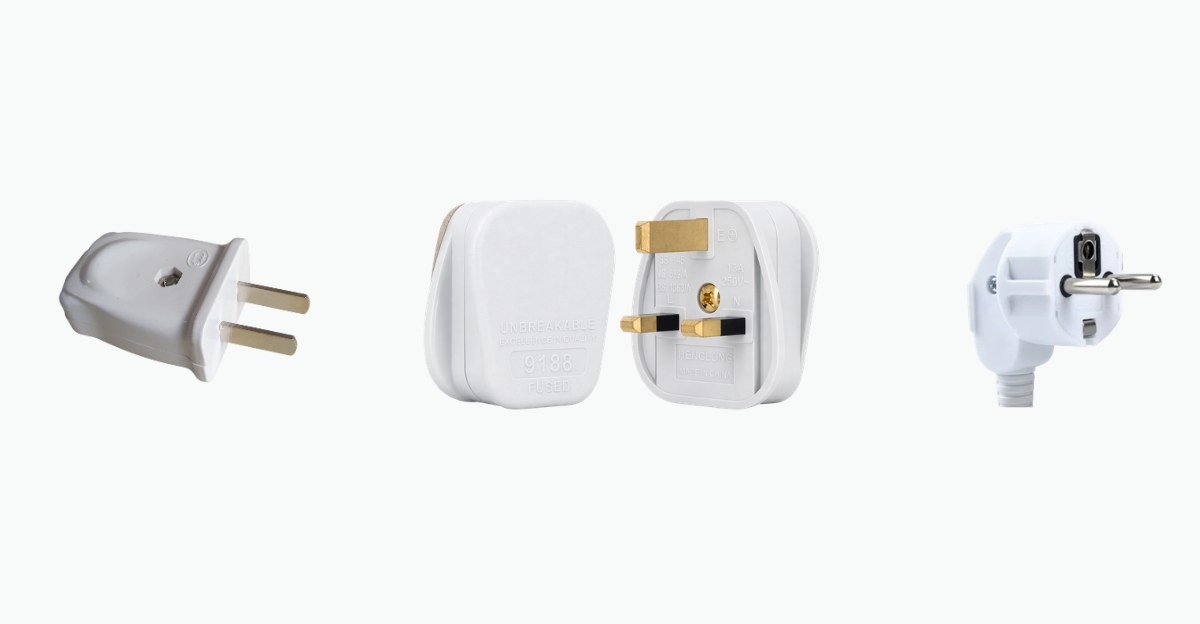
Where you see it: the three rectangular pins in a triangle — the UK and Ireland, Hong Kong, Singapore and Malaysia, the Gulf five (Saudi Arabia, Qatar, Kuwait, Bahrain, Oman), and much of Africa. This is the plug system this factory manufactures and ships directly, from plug tops to power strips.
What to look for: three rectangular pins from the front — then turn the plug over and open the fuse cover. The fuse inside the plug is BS 1363's signature: a BS 1362 cartridge, rated to protect the flexible cord, that no photo of the pins alone will show. It is also the fastest test that a look-alike is a real BS 1363 plug and not an unfused copy.
Why it changes the order: the fuse is part of the product — quotes and builds are priced with the BS 1362 cartridge fitted, and buyers check its rating marking on samples. The rating line on an order reads: BS 1363-1 plug, 13 A · 250 V, BS 1362 fuse fitted. On supply: the UK, Ireland and most BS 1363 markets run 230 V · 50 Hz — and Saudi Arabia runs the same nominal voltage at 60 Hz, the one frequency on this page that differs, which matters for anything with a motor, a clock or a heater.
| Configuration | Pins | Earth | Rating | Standard |
|---|---|---|---|---|
| BS 1363-1 (Type G) | Three rectangular pins in a triangle; shuttered socket; fuse inside the plug | Earth pin | 13 A · 250 V | BS 1363-1; fuse to BS 1362 |
Reading the codes BS 1363-1 is the British standard for 13 A plugs — it fixes the pin dimensions and requires the fuse; BS 1362 is the standard for the cartridge inside it. Markets across the Gulf and Asia run national standards based on BS 1363.
3. South Africa — How to Recognize the Large Round-Pin Plug?
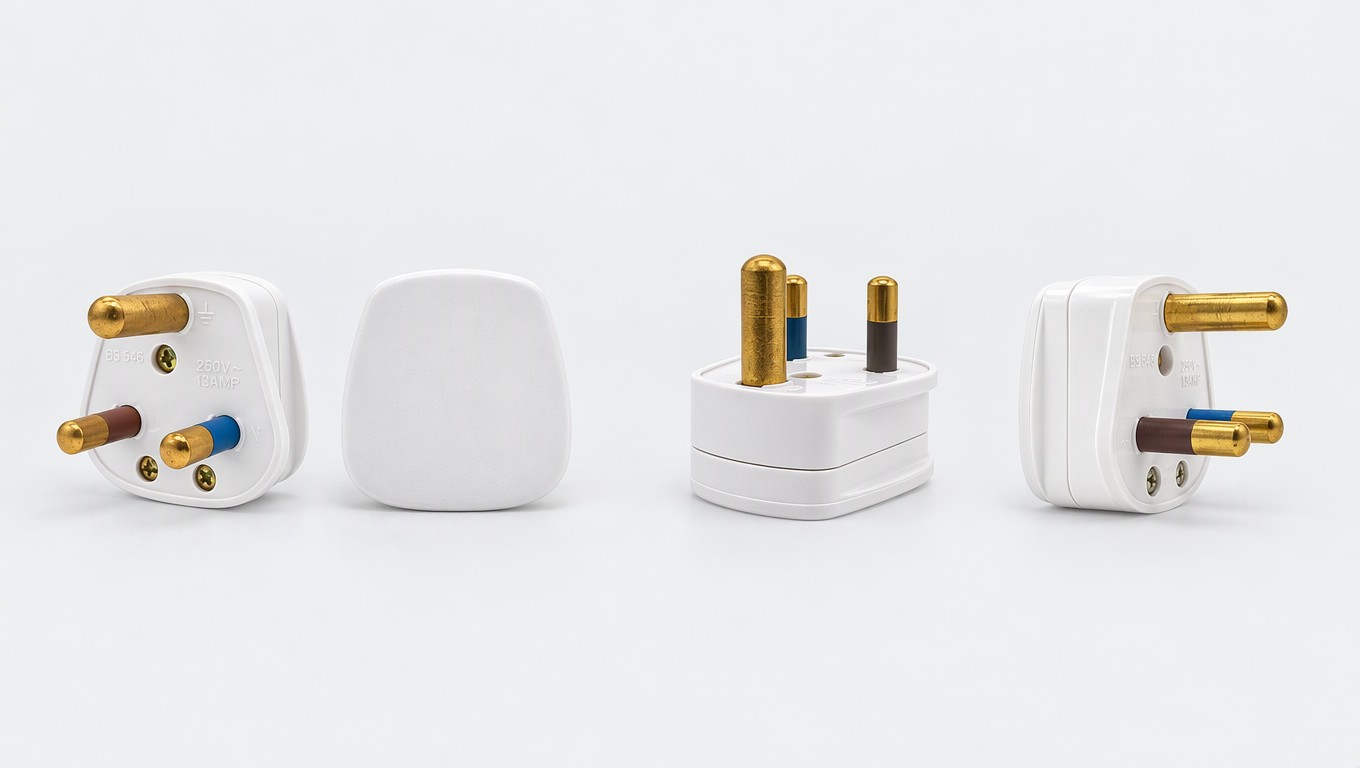
Where you see it: the three large round pins in a triangle — South Africa's standard socket accepts this 15 A plug, and the same family (smaller pin sizes) covers older and neighbouring installations.
What to look for: three round pins — visibly thicker than the British rectangular ones — with the larger top pin as earth. The second giveaway is what is missing: no fuse. Unlike BS 1363, the BS 546 plug carries no cartridge; the protection sits in the circuit, not in the plug. Always compare by pins and thickness: a 15 A Type M plug will not enter the smaller 5 A sockets of the same family.
Why it changes the order: the body is phenolic (Bakelite); the unfused construction changes the build (no fuse cover, no cartridge operation on the line), and the destination paperwork runs on South Africa's own scheme — our South Africa NRCS guide covers the LOA route. The rating line on an order reads: BS 546 plug, 15 A · 250 V (Type M), manufactured to South Africa's SANS 164-1. Our BS15 South African plug top is exactly this build — brass round pins, BS 546 pin face, screw-terminal rewireable body.
| Configuration | Pins | Earth | Rating | Standard |
|---|---|---|---|---|
| BS 546 15 A (Type M) | Three large round pins in a triangle; larger top pin is earth; unfused | Earth pin | 15 A · 250 V | BS 546; South Africa SANS 164-1 |
Reading the codes BS 546 is the British round-pin plug and socket standard — four sizes (2 A, 5 A, 15 A, 30 A), the 15 A size being Type M; South Africa's national standard SANS 164-1 covers the same system. The plug is polarized and unfused.
4. Worked Example — A UK-Plug Power Strip for Saudi Arabia
A buyer writes: "I want to sell power strips in Saudi Arabia — UK plug." Everything the enquiry needs, in one place:
- The plug line — BS 1363-1, 13 A · 250 V, BS 1362 fuse fitted. The BS 1363 buyer's guide covers the one-minute sample check.
- The strip configuration — outlet count and shutters, cable cross-section and length, overload or surge option; see the configuration guide.
- MOQ by configuration — USB and USB-C versions from 1,008 pcs per model; non-USB 1,500 pcs per model for one configuration, or 1,000 pcs each when two or more configurations share an order. Full tiers in the MOQ guide.
- Documents — Saudi Arabia: SASO requirements via the SABER platform (see the SABER step-by-step); onward GCC sales: G-Mark under the Gulf Standardization Organization (see the G-Mark guide). UKCA documentation is on file for the plug tops.
- The RFQ itself — copy these lines into the enquiry:
Destination market: Saudi Arabia · Product: power strip · Plug configuration: BS 1363-1, 13 A · 250 V, BS 1362 fuse · Rated voltage/current: 250 V, 13 A · Earthing requirement: earthed · Documents requested: SABER / G-Mark status · Order quantity: ___
RFQ one-liner: "Saudi Arabia Type G power strip — BS 1363-1 plug, 13 A · 250 V, BS 1362 fuse, 4 outlets with shutters, 3 m × 1.25 mm² cable. Please quote per-configuration MOQ and SABER / G-Mark documentation status."
On exactly this configuration, our 9188 fused plug top is manufactured to BS 1363-1 — UKCA documentation and a G-Mark certificate covering the model are on file, and it ships from stock (500-piece stock quantity). For South African programmes, our BS 546 plug tops are produced on the OEM line — see the MOQ guide for that tier.
Frequently Asked Questions
Does a plug adapter change the supply voltage?
No. An adapter changes the shape of the connection, nothing else. The voltage and frequency at the socket stay what the destination supplies, and an appliance rated for a different supply still needs a voltage converter or a dual-rated design. That is why the RFQ names the destination market separately from the plug configuration: both lines filled in, and the adapter question disappears.
What information does a supplier need beyond "UK plug"?
The lines in the worked example above. "UK plug" fixes only the pin shape. To quote and manufacture, a supplier also needs the destination market (for the supply and the access scheme), the rated configuration (BS 1363-1, 13 A · 250 V, BS 1362 fuse for the plug itself), the strip configuration and cable specification when the product is a power strip, the requested documents, and the order quantity.
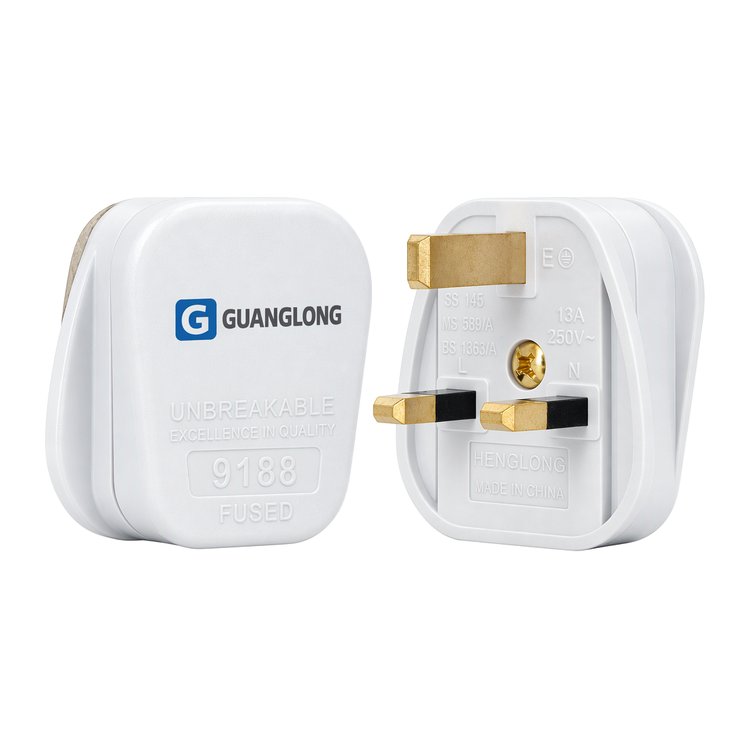 918813 A UK fused plug top · BS 1363-1
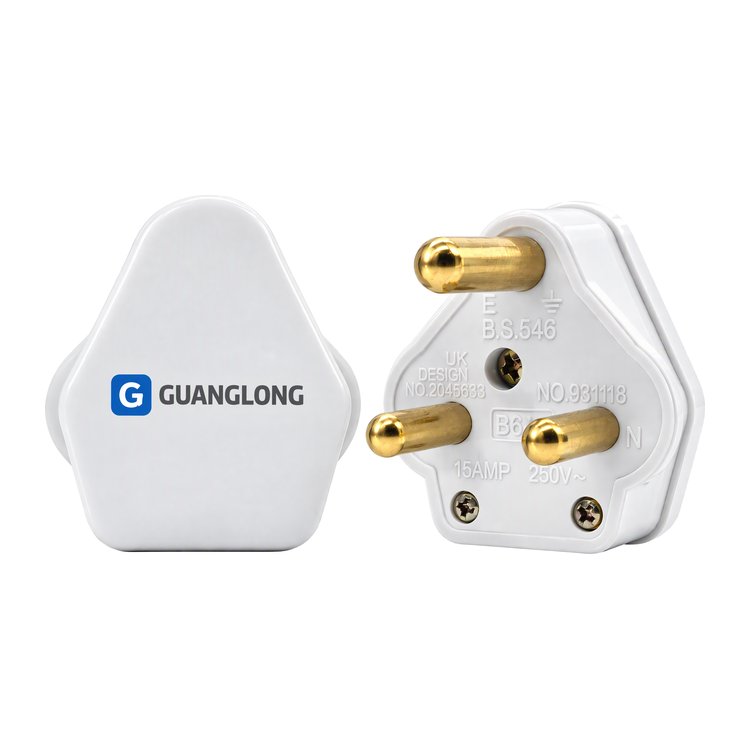 BS1515 A South Africa plug top · BS 546 / SANS 164-1