SABER Step by Step — From HS Code to SABER Certificate for Sockets (2026 Practice)
Our first SABER guide explains what SABER is; this one walks the platform. Because the questions importers actually ask are sequential: which HS code and technical rule does my socket fall under, do I need IECEE recognition before anything else, what happens on saber.gov.sa in what order, and where do shipments usually get stuck? Here is the whole chain for socket products — extension sockets, plug tops and wall switches under the BS 1363 / SASO 2203 family — as we run it from the factory side.
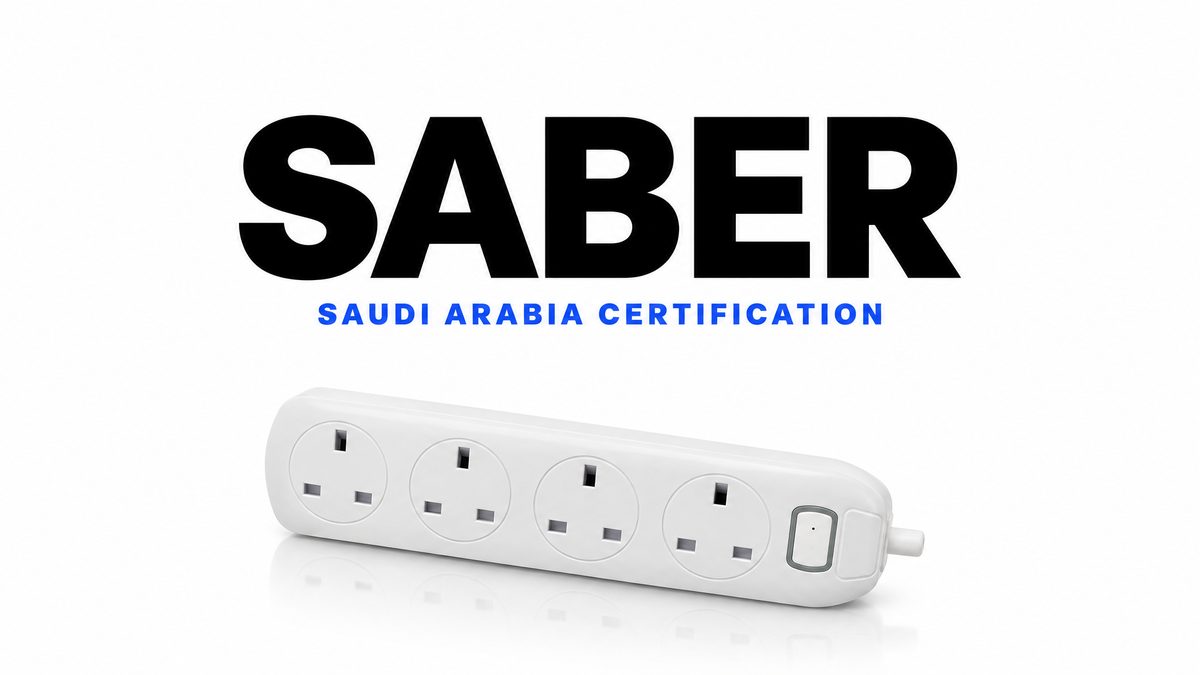
1. Step Zero: HS Code and Technical Rule
Every product on SABER is governed by a technical rule tied to its HS code. For socket products the practical anchors are:
| Product | Typical HS heading | Saudi technical rule family |
|---|---|---|
| Extension sockets / power strips | 8536.69 | SASO IEC 60884-1 family + SASO 2203 socket requirements |
| Plug tops (fused, BS pattern) | 8536.69 | SASO 2203 / BS 1363-1 references |
| Wall switches & sockets | 8536.50 / 8536.69 | SASO IEC 60669 / 60884 family |
Get this mapping right before anything else — the wrong technical rule sends your application into the wrong conformity path and every later step inherits the error. If you are unsure, send us the model and destination; we map it against the rules our own certificates run on.
2. The IECEE Question: When Recognition Comes First
For BS 1363-pattern and SASO 2203 socket products, the IECEE route is the standard path: the product is tested and certified under the IECEE CB Scheme (against IEC 60884-1 plus Saudi deviations), and the resulting IECEE Recognition Certificate (RC) becomes the backbone of the SABER application.
- If the model already holds a valid CB certificate — as our socket series do — the IECEE step is a conversion, not a retest. This is where factory-side certification saves weeks.
- If it does not, budget the test window into your import plan; this is the longest single lead-time item in the whole chain.
3. The Platform Sequence on saber.gov.sa
- Importer registration — your Saudi importer registers on SABER (this is their account; the factory cannot hold it).
- Product application — against the technical rule, uploading the IECEE RC / test reports, product photos, and Arabic+English labelling evidence.
- Certificate of Conformity for the product (PCoC) — issued per model, typically valid one year.
- Shipment Certificate of Conformity (SCoC) — issued per consignment against the PCoC, with invoice, packing list and B/L data. This is the document Saudi customs clears against.
The PCoC/SCoC split mirrors East Africa's model-licence/shipment-CoC logic: one paper for the product, one paper for the boxes.
4. Where Shipments Actually Get Stuck
- Arabic labelling shortfalls. Saudi labelling rules require Arabic content on the product/packaging. A product that is technically certified but labelled wrong fails the application review — we print Arabic-rated labels for Saudi-bound orders as standard.
- PCoC expiry mid-project. A one-year PCoC that lapses between order confirmation and shipment forces a re-issue; check its currency at every reorder.
- Model drift. The SCoC must match the shipped models exactly — the same goods-certificate discipline as KEBS and SONCAP. "Same product, new SKU code" needs a PCoC amendment, not optimism.
- HS-to-rule mismatch. Covered in Step Zero, but it bears repeating: everything downstream inherits Step Zero.
5. What We Hand You for a Saudi Order
- Valid IECEE RC / CB certificates for the ordered models (BS 1363 / SASO 2203 family)
- Arabic + English rating-label artwork and printed samples
- Product photos and specification sheets sized for the SABER upload
- Full cooperation with your importer's SABER application — including model-matching checks before documents are cut
Sourcing certified sockets for Saudi Arabia? Browse our SASO / G-Mark certified range and our SABER & SASO 2203 compliance guide, or request a formal quotation.
6. Hot Models for the Saudi Arabia Market at a Glance
Extension boards — the SASO-ready ladders
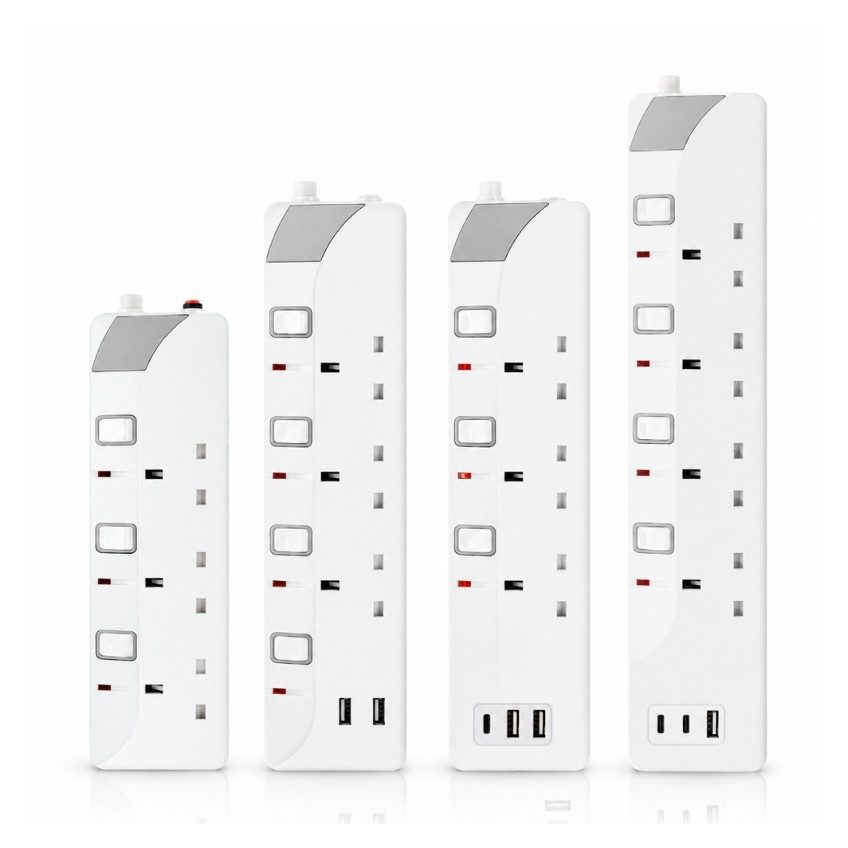
2023B — the entry switched ladder
2–5 way board with an individual switch per socket, indicator light and child-safe shutter — the entry card on the BS 1363 face SABER files are built around.
BS 13632–5 wayIndividual switches13A 250VMOQ from 1,008 pcs/model
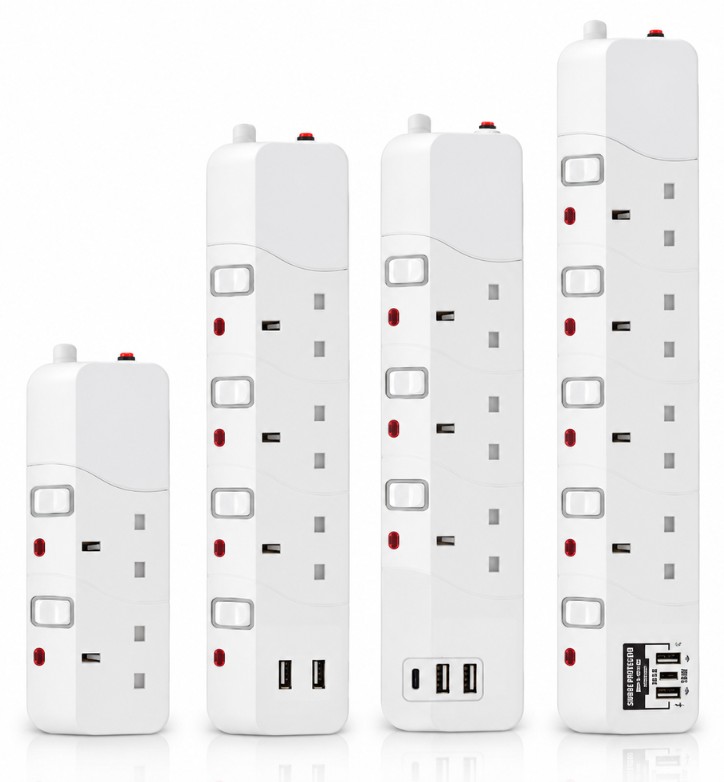
4023B — the surge-protected 2–5 way ladder
Surge-protected board with individual switches, USB/Type-C configurable — the deep ladder for programmes that shelve two housings.
BS 1363Surge protected2–5 wayMOQ from 1,008 pcs/model
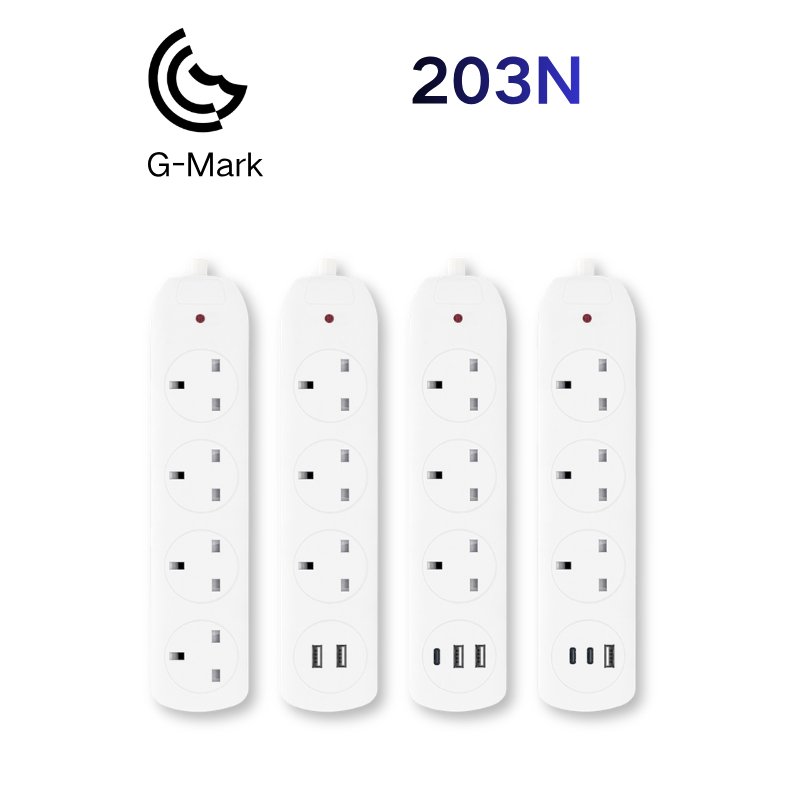
203N — the surge-protected 4-way on the 203 platform
A compact 4-way on the 203 platform with overload protection and child-safe shutter — the shelf staple for hypermarket and hardware programmes.
Overload protected2–4 way13A 250VMOQ 1,008 pcs/model
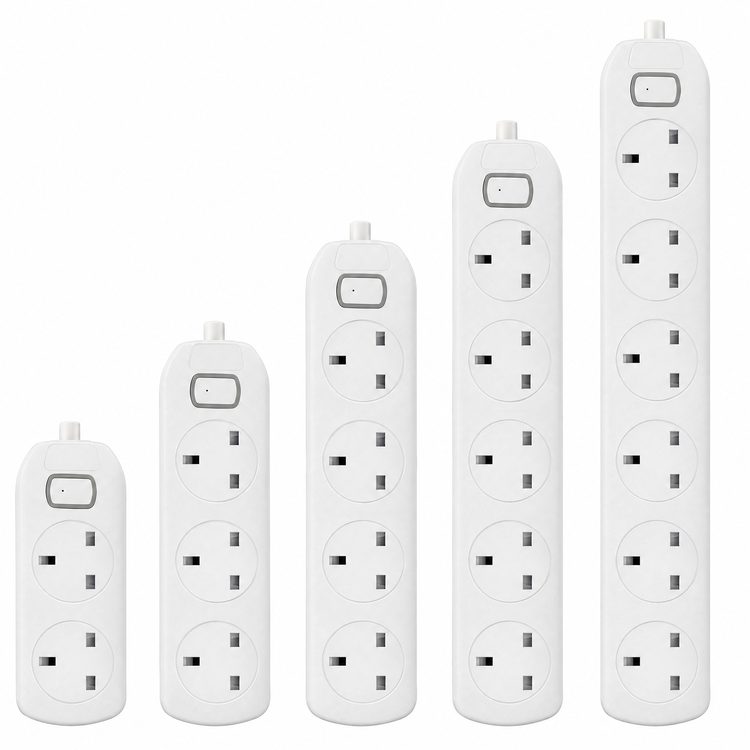
203S — the BS 1363 203-platform ladder
BS 1363 face with master switch and overload protection, 2–6 way — the widest ladder on the 203 platform for Saudi shelves.
BS 13632–6 wayOverload protectedMOQ 1,008 pcs/model
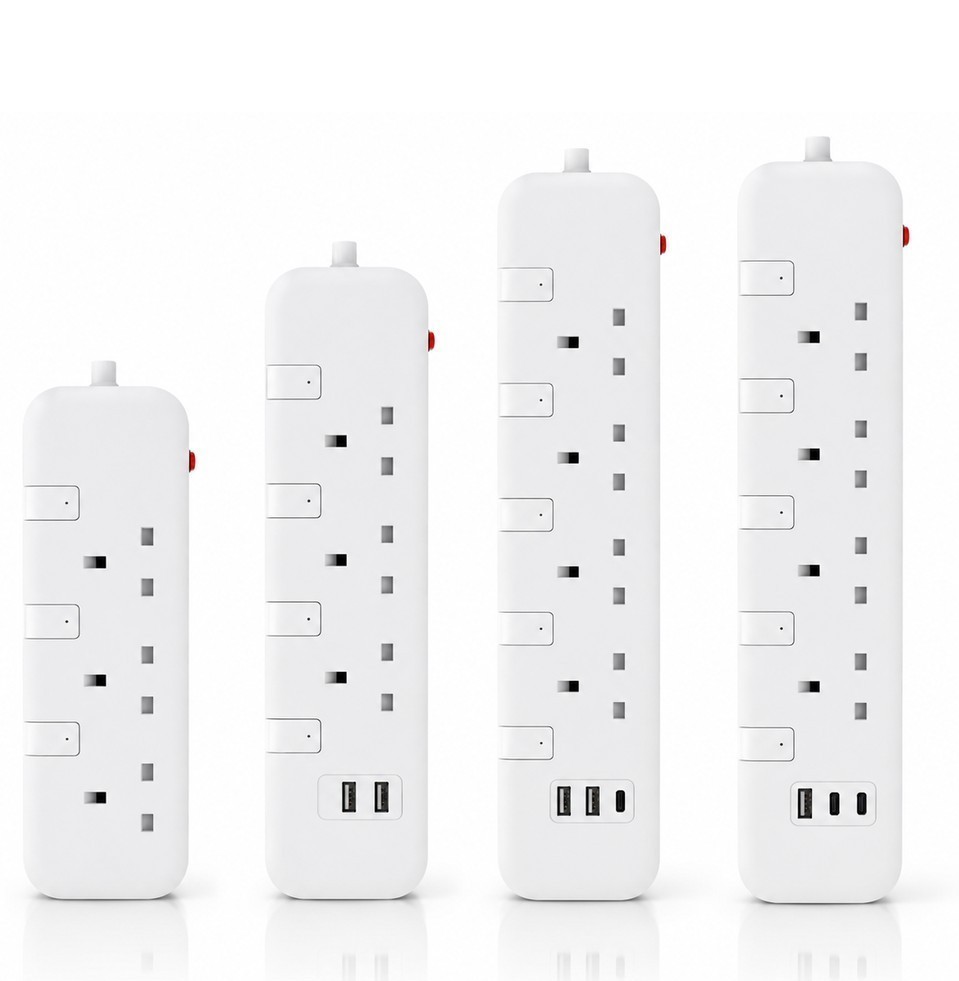
803B USB-C — the compact entry
The compact 2–3 way with individual switches and Type-C — the price-point card for multipacks, ordered in the USB-C configuration for Gulf programmes.
BS 13632–3 wayType-CMOQ from 1,008 pcs/model
Frequently Asked Questions
What is the difference between PCoC and SCoC?
The PCoC (Product Certificate of Conformity) certifies the model and is typically valid one year. The SCoC (Shipment Certificate of Conformity) certifies the consignment and is issued against the PCoC with that shipment's invoice, packing list and B/L. Saudi customs clears the container on the SCoC.
Do all socket products need IECEE recognition first?
For BS 1363 / SASO 2203 family products, the IECEE recognition route is the standard path — the SABER application is built on an IECEE Recognition Certificate backed by CB Scheme test reports. Models with existing valid CB certificates convert quickly; models without one need the test window planned in.
How long does the whole SABER chain take?
With existing CB/IEC reports and a registered importer: the platform sequence runs in days-to-weeks, dominated by review queues. The long poles are IECEE testing for uncertified models and Arabic labelling corrections — both avoidable with a factory whose certificates and labels are current.
Can the factory hold the SABER account?
No — the importer holds the SABER registration; the factory supplies the technical file and certificate pack. We run model-matching checks against the PCoC before any Saudi order's documents are cut.
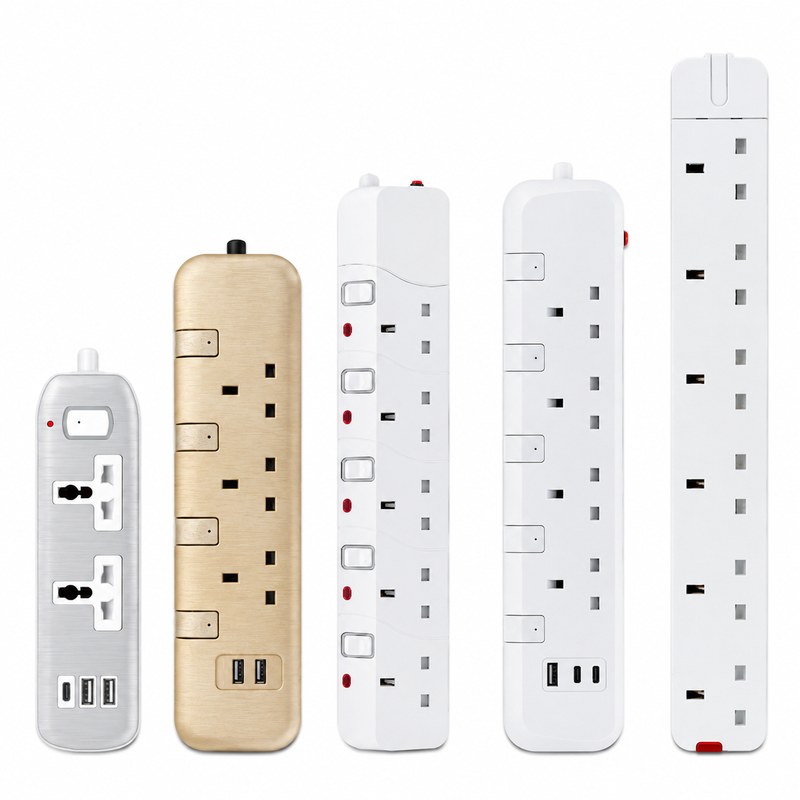 Extension Sockets & Power StripsUK 13A extension leads, surge-protected power strips with US…
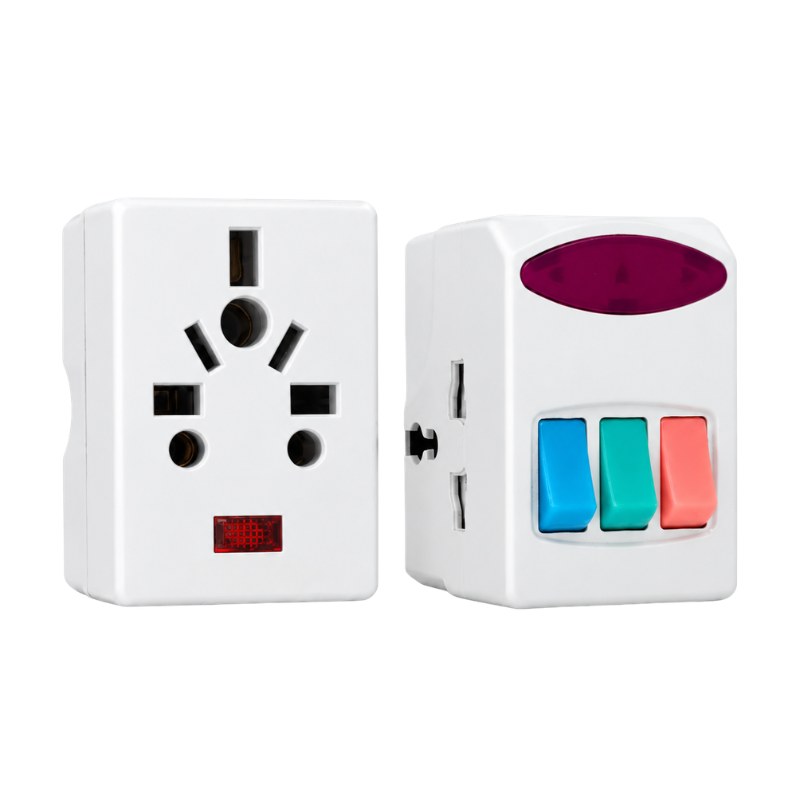 Plug Adapters & Travel AdaptersUniversal and UK 13A plug adapters, travel adaptors with USB…
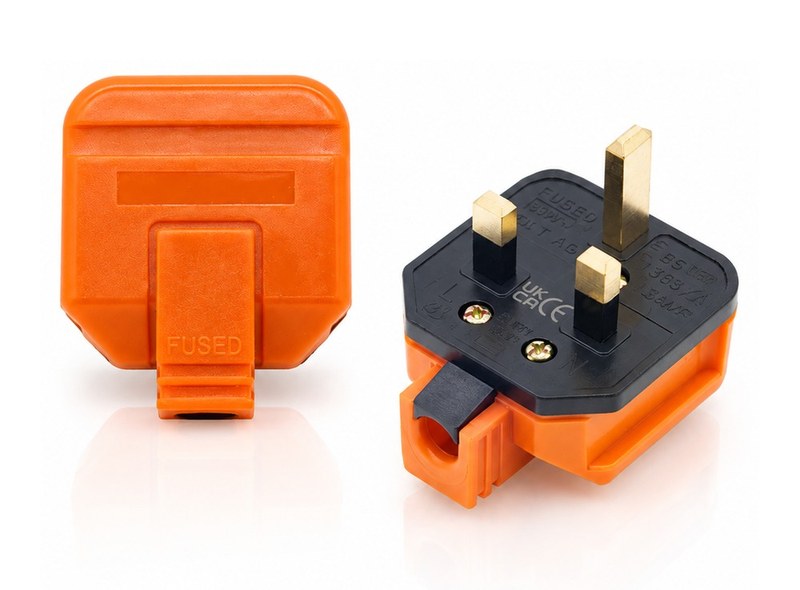 Plug Tops13A UK fused plug tops and South Africa 15A plug tops — full…
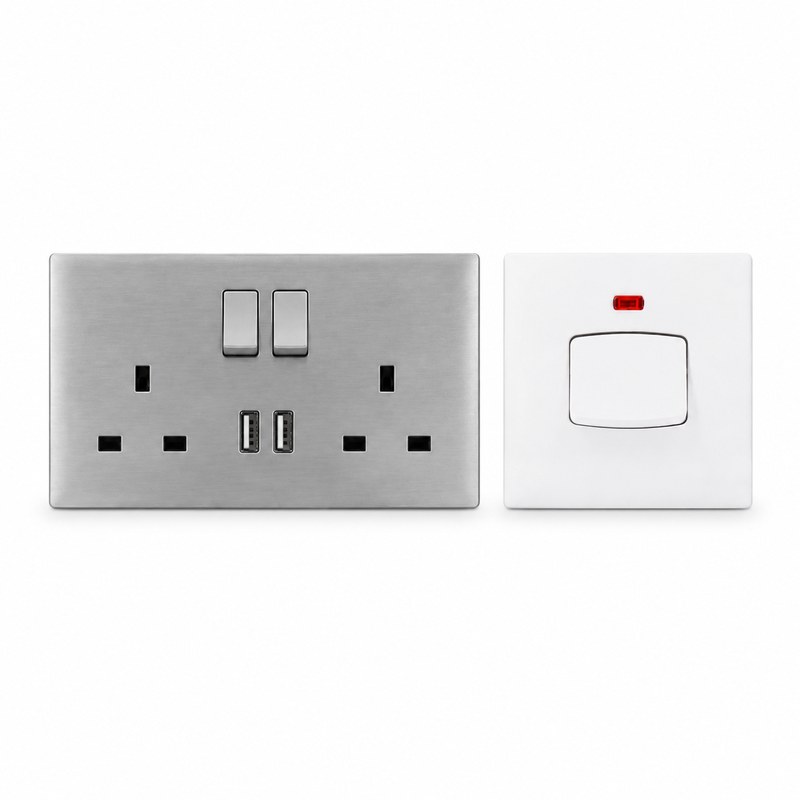 Wall Sockets & SwitchesWall-mounted sockets, switch panels and UK plug tops with US…
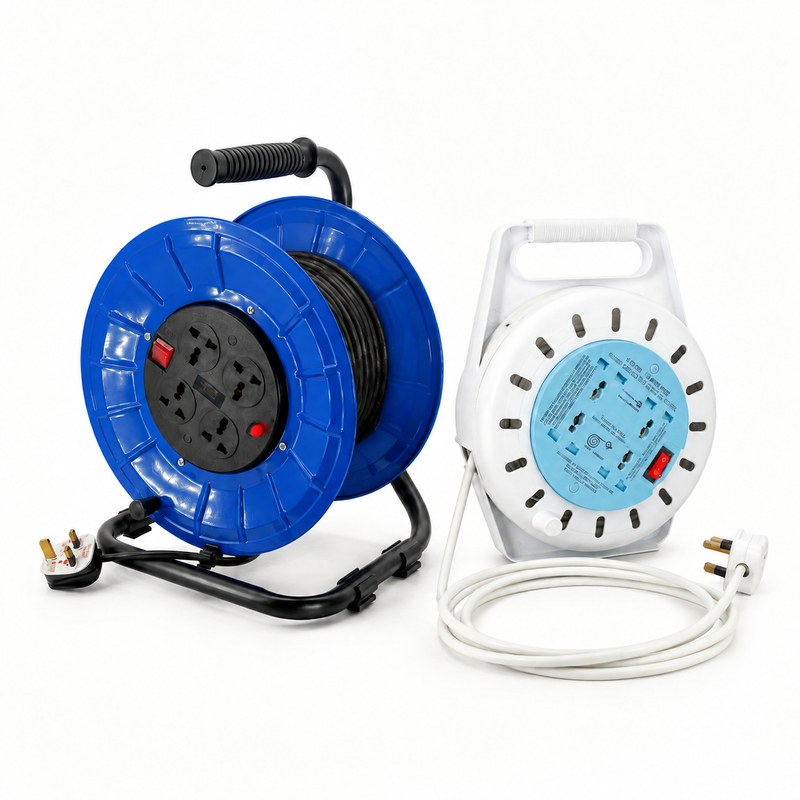 Cable Reels & Extension Drums4-way cable reels with overload protection, 13A UK standard…