BS 1363 vs SASO 2203: SABER Certification for Sockets — the BOM Differences That Decide Saudi Clearance
The same white BS 1363 extension socket can clear Jeddah customs in one configuration and be held in another — same housing, same brand, sometimes the same factory. The difference is not paperwork luck. Saudi Arabia certifies sockets against its own standard (SASO 2203 for plugs and socket-outlets), and three of the differences from the British build — the switch poles, the fuse marking and the cable gauge — are rejection magnets at SABER inspection, customs examination and sampling tests. This guide maps the SABER certification structure, puts BS 1363 and SASO 2203 side by side with the commercial consequences attached, and shows how a factory that builds for both markets controls the BOM before a container is stuffed.
Sources: SASO / SABER platform documentation, SASO IECEE Recognition Certificate scope (Electro-technical Devices and Components, updated Nov 2021), and the 2025 mandatory dual-certificate update. Case data marked 【factory knowledge base】 comes from our own Saudi shipment and certification records — for reference only; Saudi requirements evolve and clearance always rests with customs inspection.
How SABER Certification Actually Works: Two Certificates, Two Clocks
Saudi Arabia's import conformity system runs on the SABER platform, and for regulated products like socket-outlets it issues two different certificates that buyers constantly conflate:
1. Product Certificate of Conformity (PCoC). Issued per product family and importer, valid one year. It certifies that the product model meets the applicable Saudi technical regulation. This is the registration layer.
2. Shipment Certificate of Conformity (SCoC). Issued per consignment, referencing a valid PCoC, at the moment the shipment is ready. No SCoC, no customs clearance — one is required for every shipment, every time.
Since 1 January 2025, SASO requires both certificates on all regulated shipments. The mistake that burns buyers: treating the PCoC as a permanent licence. It is an annual registration tied to specific models — and (as below) tied to a specific bill of materials. Change the switch or the cable and the registered file no longer describes the product.
The IECEE Route Most Guides Miss
For plugs and socket-outlets specifically, there is a step between "have test report" and "register on SABER" that generic guides skip. Socket-outlets fall under SASO's Electro-technical Devices and Components technical regulation, where SASO issues an IECEE Recognition Certificate (SIRC) only after an accredited IECEE CB scheme laboratory issues a test report or CB certificate demonstrating conformity with the relevant SASO/IEC standards.
So the real chain for a BS 1363-family socket heading to Saudi Arabia is:
IECEE CB test report (against the SASO-adopted standard, e.g. SASO 2203) → SASO IECEE Recognition Certificate → PCoC registered on SABER (1 year) → SCoC per shipment → customs.
A factory that already holds CB-scheme test reports from its UK-standard builds starts this chain several steps ahead — which is exactly the reuse argument in the companion guides on UKCA certification for BS 1363 sockets and G-Mark certification for GCC socket plugs.
BS 1363 vs SASO 2203: The Difference Table with Consequences Attached
This is the comparison almost nobody publishes — not the parameter list, but what each difference does to your shipment. The table reads against a UK-standard BS 1363 build as the baseline. (SASO 2203 is the Saudi technical standard for household plugs and socket-outlets — 250 V / 13 A, Type G pattern.)
| Item | UK build (BS 1363) | Saudi build (SASO 2203) | Commercial consequence of getting it wrong |
|---|---|---|---|
| Switch poles | Single-pole switching acceptable | Double-pole switching required — both live and neutral interrupted | A single-pole UK-style switch on a Saudi-bound socket is a rejection item, not a discount item |
| Fuse / cable protection | BS 1362 cartridge fuse, rating matched to cord | Fuse must be ASTA-marked (or equivalent) with rating matched to the cord | Unmarked or mismatched fusing fails sampling and inspection |
| Flexible cord | 3×1.25 mm² certified cable is the UK certified build | 3×1.5 mm² certified cable required for the Saudi certified build | The popular UK cord gauge does not satisfy the Saudi certified configuration |
| Maximum rating marking | 13 A 250 V, 3250 W | 13 A 240 V, 2990 W | Silk-screening a higher wattage than the Saudi build supports stops customs clearance |
| Voltage system | 230 V nominal | 240 V nominal | Marking and test voltage follow the destination build |
Read the table commercially, not technically. The Saudi build is not a "better version" of the UK socket — it is a differently optimised one. Ordering "the same socket, just for Saudi" without a BOM review is how the rejection cases start.
Two Rejection Magnets: the Fuse and the Cable
Across SABER inspections, customs examinations and market sampling, two component-level failures repeat far more often than the rest — and both are invisible until someone opens the product:
The fuse without third-party marking. A ceramic tube that carries no ASTA (or equivalent) approval mark, or carries a rating that does not protect the fitted cord, fails the conformity review. On a ring-circuit-derived product this component is the safety heart — Saudi checks treat it accordingly.
The cable that does not match the certified build. A 3×1.25 mm² cord on a socket registered as a 3×1.5 mm² Saudi build is a product that no longer matches its own certificate — which converts a paperwork problem into a physical inspection failure.
Both failures share an uncomfortable feature: they surface after the container ships — at SABER document review, at port examination, at market sampling — and the practical consequence ranges from re-labelling to whole-container holds. The fix costs minutes at the BOM stage: a factory that builds for both markets runs two component stacks — ASTA-marked fusing and 3×1.5 mm² certified cable for Saudi, the UK stack for Britain — and never mixes them. 【Rejection patterns: factory knowledge base from Saudi-bound shipments and certification projects.】
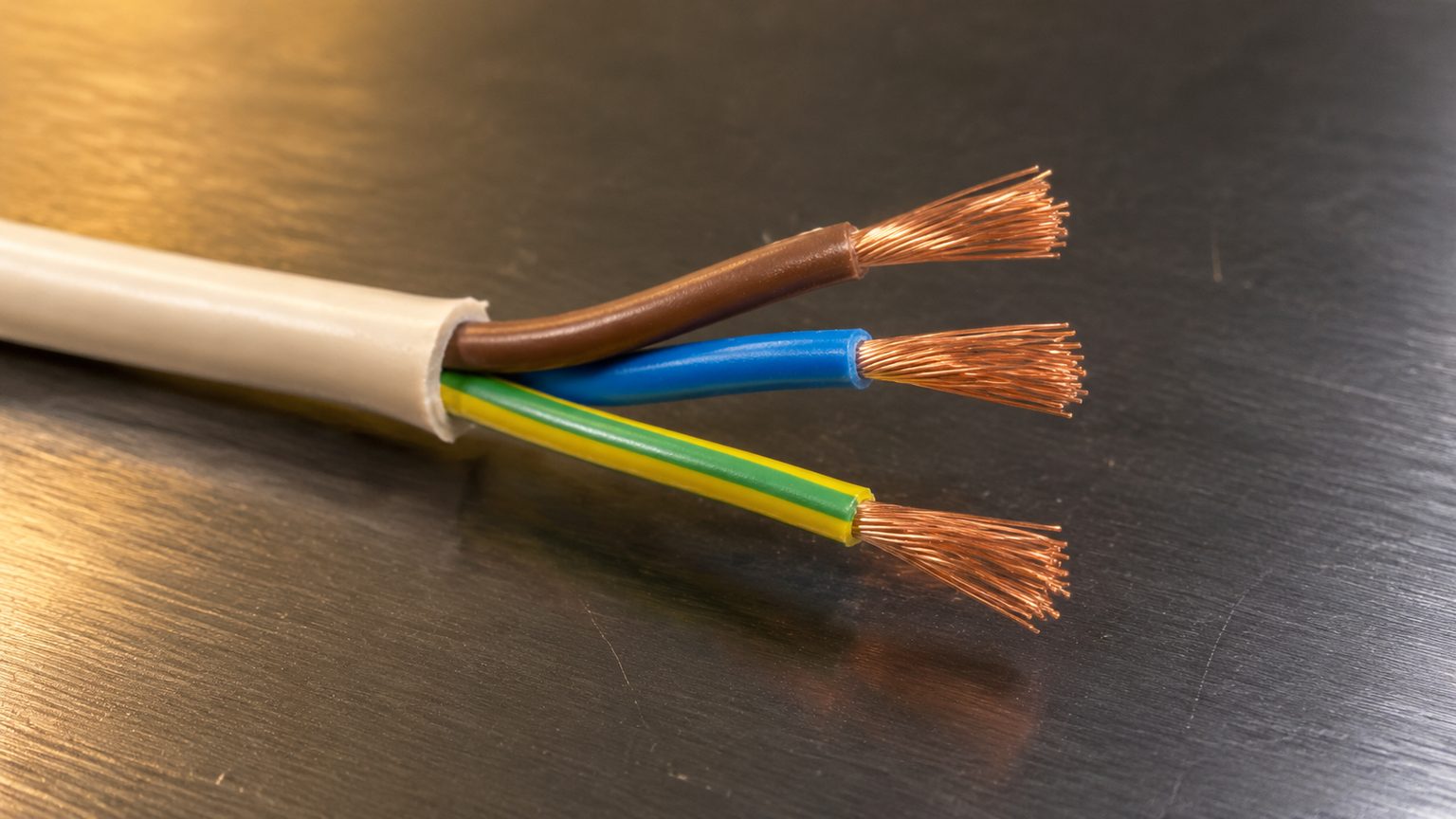
Compare this with the UKCA and G-Mark regimes in the companion guides: the marking and paperwork differ, but the discipline is identical — the components inside the housing must match the market the certificate describes.
SQM in One Paragraph
Saudi Arabia also runs the Saudi Quality Mark (SQM) — a voluntary quality mark demonstrating a factory's quality-management and product-conformity standing. It is not the same thing as SABER, it is not a customs clearance document, and a socket bound for Saudi Arabia does not require it to clear. Factories hold it to signal quality-system maturity; buyers should not confuse "SQM-certified" with "SABER-registered" — the shipment still needs the PCoC/SCoC chain.
How We Build for Saudi Arabia
We are a UK-standard socket factory that also builds the Saudi configuration — the housing is shared, the internals are not:
- Double-pole switching on the Saudi build (the UK build's single-pole switching does not travel);
- ASTA-marked fuse protection with the rating matched to the fitted cord;
- 3×1.5 mm² certified cable, 13 A 240 V, rated and marked 2990 W — not the UK build's 3250 W;
- Certification path: SQM and G-Mark experience on the same product family, with the IECEE → SIRC → PCoC → SCoC chain run per the Saudi build's registered BOM;
- BOM discipline: the Saudi components are specified at quotation stage, so the certificate, the shipment and the product are the same object.
Because 7 of our 26 series are UK-standard builds sharing base construction and test data, a buyer ordering both UK and Saudi configurations from the same family gets reused base test data and parallel certification — not two independent projects.
The BOM Conversation to Have Before You Order
One socket family, three certification regimes, three component stacks — this is the single most useful table a buyer can put in front of a factory:
| Target market | Switch | Fuse / cable | Certification route |
|---|---|---|---|
| Great Britain (UKCA) | Single-pole acceptable | BS 1362 ASTA-marked fuse; 3×1.25 mm² certified cable | Self-declaration or approved body — full UKCA guide |
| GCC five states, excl. Saudi (G-Mark) | UK-standard BOM often reusable — confirm GSO acceptance first | UK-standard stack typically travels | Type test by GSO notified body — full G-Mark guide |
| Saudi Arabia (SABER) | Double-pole required | ASTA-marked fuse + 3×1.5 mm² certified cable | IECEE → SIRC → PCoC → per-shipment SCoC |
Bring this to your factory and ask one question: which market is this BOM certified for? If the answer is "all of them", the factory has been mixing stacks — and one of your three markets is exposed.